

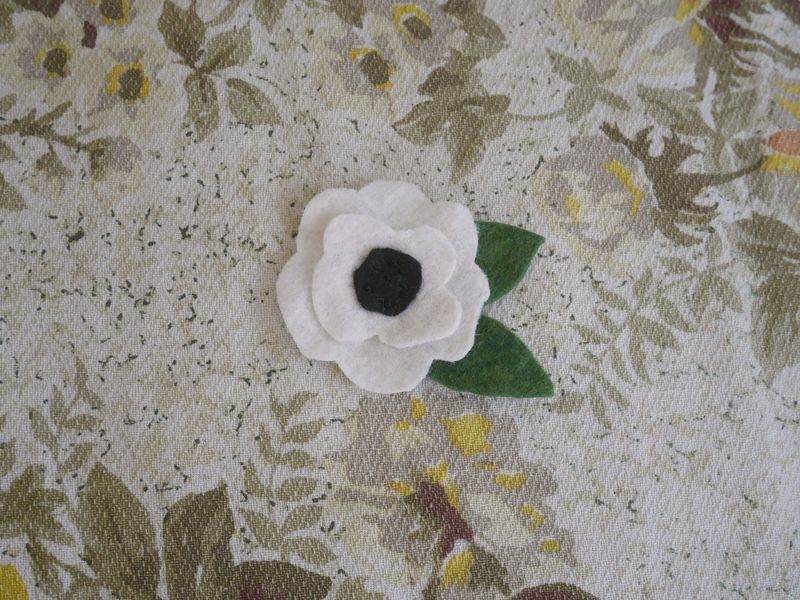
Today in New Zealand we're observing Anzac Day – you can read more about it here. It's a day to remember all those who have served and died in all wars and conflicts, but was originally established to remember the ANZACs (Australian and NZ Army Corps) who fought at Gallipoli during World War 1.
It's traditional to wear a red poppy pin on Anzac Day and the days either side of it, because red poppies flowered in the fields of soldiers' graves in WW1, and the RSA has sold them to raise funds to support veterans. But I also like the idea of wearing a white poppy, which is a universal symbol of peace.
The white poppy was first introduced by the UK Women's Co-operative Guild in 1933 and is now sold by the Peace Pledge Union, as a pacifist alternative to the red poppy. Their motto is "War is a crime against humanity. I renounce war, and am therefore determined not to support any kind of war. I am also determined to work for the removal of all causes of war."
I was talking about this with my friend Pia the other day, and she said she had been working on some white poppy pins for her family to wear. I have taken that idea and made some pins myself – probably not as beautiful as Pia's, but simple enough for the kids to make some too.
In case you'd like to make some too, I've included a template (in pdf format so you can print it off and cut out) and some basic instructions below. You could of course also use the template to make red poppy pins. Or poppies of any colour, for that matter.
MAKING A WHITE POPPY PIN
You'll need:
Small pieces of felt (I used wool-blend) or any other fabric that doesn't fray too much, in white, black, and green.
Needle, pins, thread and scissors
Safety pin
Paper pattern template – download it here: poppy pin template.
Method:
Using the paper template, cut out all the pieces from felt – (see photo below)
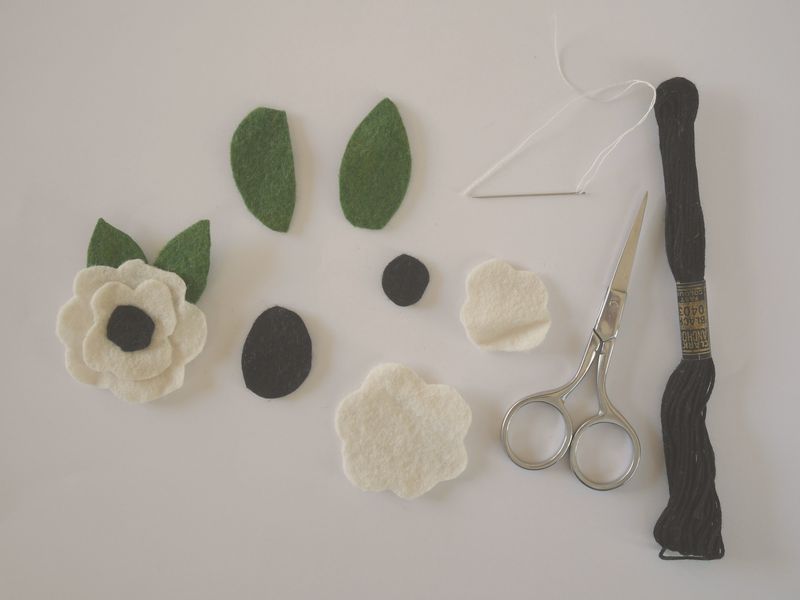
Layer all the pieces, except the larger black piece, together to make the poppy and arrange the leaves behind the flower in a pleasing way. Use black thread to secure the layers together through the centre (I worked a number of French knots on the flower centre to secure everything together.)
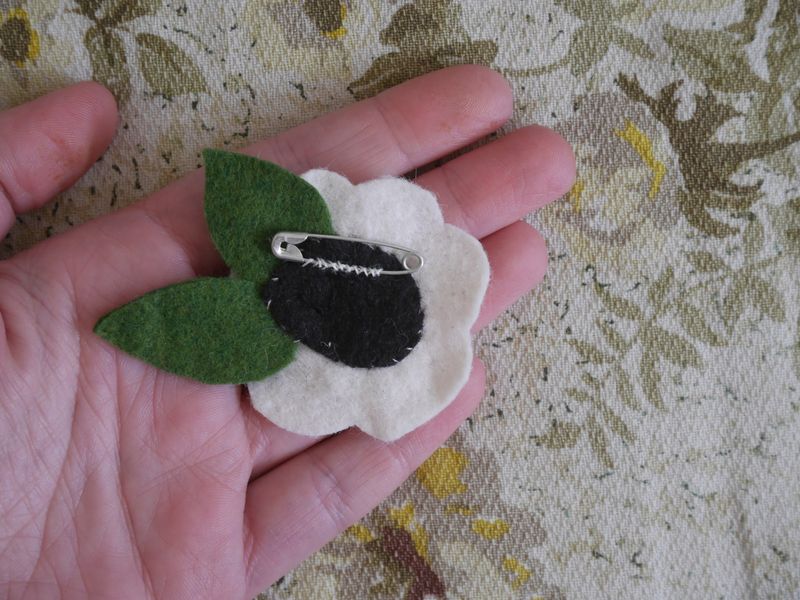
Now take the larger black piece and, using small hand-stitches, sew it to the back of the poppy, covering up your previous stitches. Then sew the non-opening side of the safety pin to this backing piece. (See photo below).


 tiny happy
Leave a comment