tiny happy

making journal

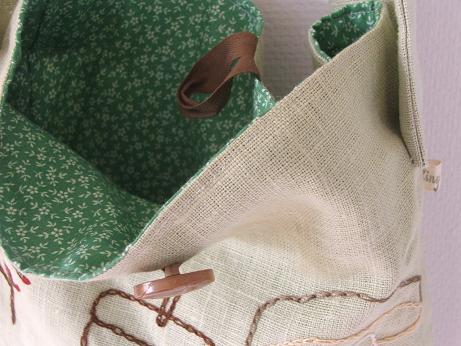
  • Olive bag

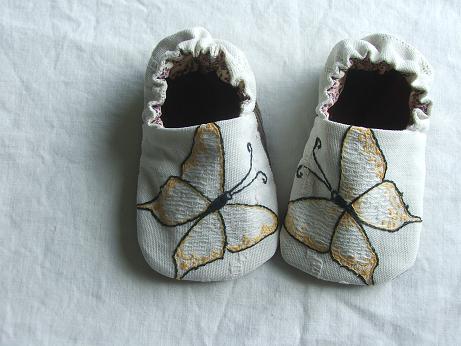
    Here are a few things I've been working on this week: some new pairs of baby shoes, a
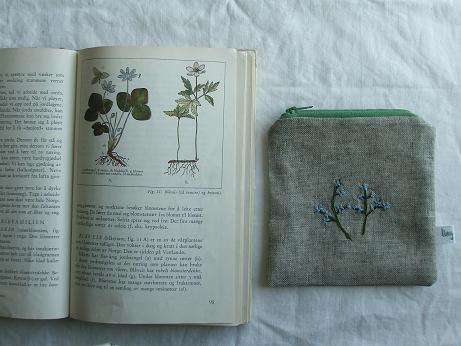
    forget-me-not purse and some new 'simple satchels' to include in
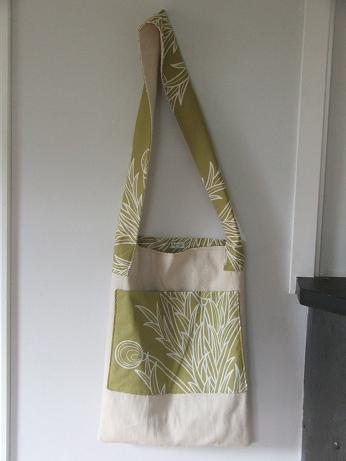
    today's shop update. These are strong and sturdy bags, to be worn
    across the body with big pockets on the front. I'm enjoying the freedom
    of using up lots of the fabric I had been saving for a mystery
    'something' but I now realise I need to just cut into- I won't be able to fit it into my suitcase next month…

    Forgetmenot

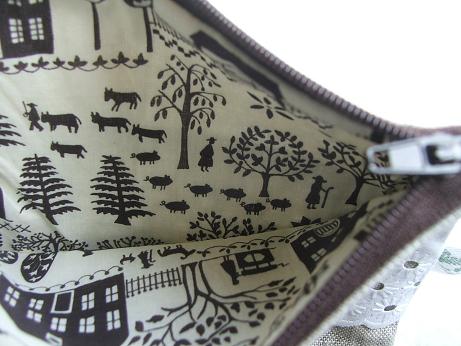
    Liberty lining

    Butterflies

    Trees 1

    Trees 2

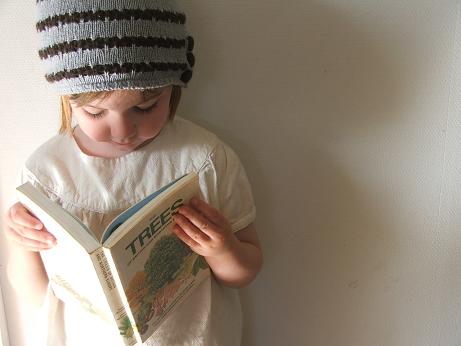
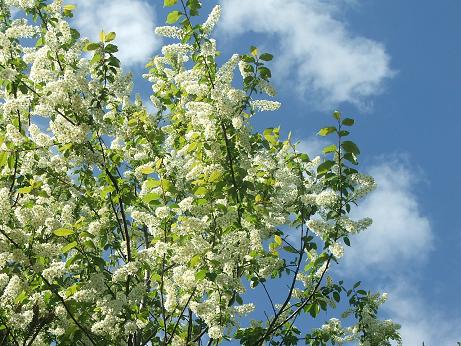
    Outside the bedroom window, this amazing tree is in bloom- I think the flowers look a little like lace. Do you know what type of tree it is? I got out my trusty 'Trees of Northern Europe' book (kindly sent by my friend Helen) and think it might be a Rowan tree, but I don't really know. Keira has now adopted the Tree Book: "I'm actually quite interested of this, Mum."
  • Spanish costume

    Spanish 1

    Spanish 2

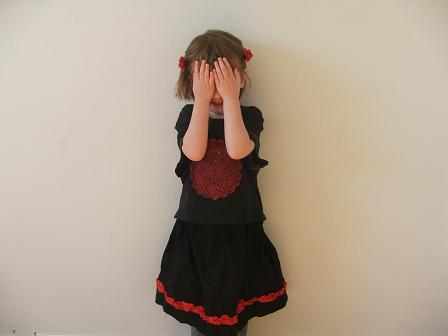
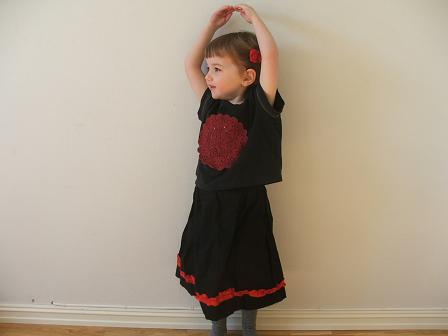
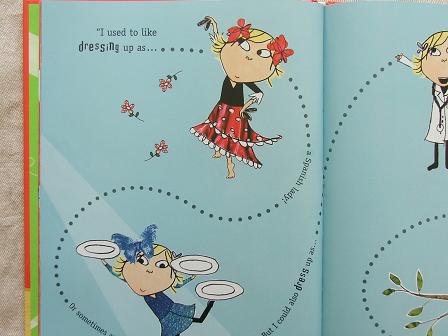
    Tom went to London recently for a weekend, and brought back a Charlie and Lola story book for Keira. She loves them. Especially Lola, who I think she fancies is rather like herself. In one of the stories, Lola is dressing up in many different costumes- in an alligator costume, a doctor's coat, a circus performer's dress- but then, and this is where little K always stops and gasps- as a Spanish dancing lady. I used some old black clothes of my own for this outfit- cut down of course. A long black skirt with a ruffled red ribbon. Two red rose hair pins. And a vintage crocheted doiley in red for the off-the-shoulder top. Olé!
  • Blue ink 2

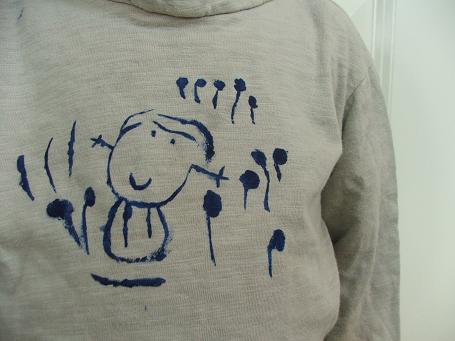
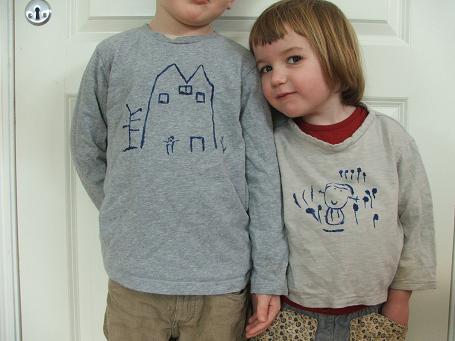
    It's school holidays this week- and this was a fun project to keep the two little ones in our house busy for a short while. I let them paint directly onto plain t-shirts with blue fabric ink and paint brushes. But first they had to do a 'plan' on a piece of paper. There's something slightly thrilling about purposefully painting on one's clothes, they found.

    Blue ink 1

  • Bird dress 1

    Bird dress 2

    Keira's had the 'flu this week, which hasn't been fun for anyone. I think it's the first time she's been that sick before. Yesterday, the sun was shining but she was still wrapped up in a quilt on the couch, and I must say, she wasn't in the best mood. She was staring out of the window at the frozen snow outside, and she asked me why there were no birds hopping around or eating seeds from our bird feeder.

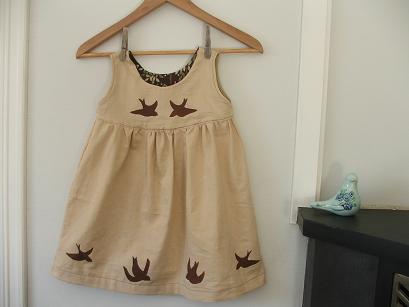
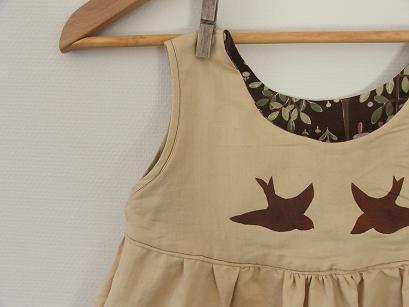
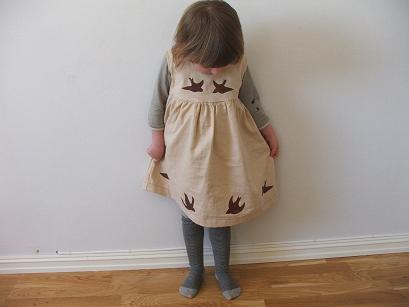
    So while she was sleeping, I made her this dress. I based the pattern on this one I made for her a while ago. The fabric is a kind of cotton sateen in a beige/pinky colour- a bit like a ballet shoe. And I lined the bodice with Japanese cotton ('My Folklore', by Lecien.) The birds were printed with little stencils I cut from freezer paper, and brown gocco fabric ink.

    It's a welcome-back-birds dress, and a get-better-soon dress. I think it's working.

    Bird dress 3
  • Gingerbread1

    Thanks for joining in with the giveaway yesterday- I used the random number generator to pick Jen. So Jen, please send me your mailing address and i'll send them express mail.

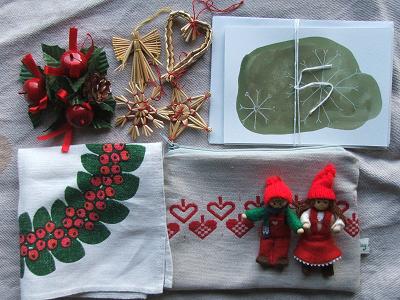
    Norwegian christmas

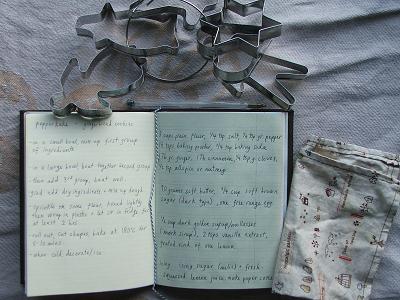
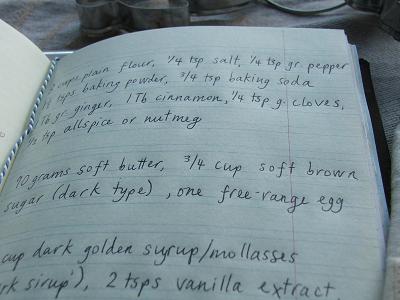
    I also promised a recipe for gingerbread cookies, or pepperkake. To be honest, I feel like a bit of a fraud because I'm no baker, and I'm not even Scandinavian. I think that Christmas baking recipes are probably the sort of thing you pass down in families. This recipe is the one I've used to bake a couple of batches of cookies now. I muddled it together from a plain gingerbread cookie recipe, and asked around to find out what the specific spices should be. Results varied! So the recipe is just how I like the cookies to taste. You could adjust the spices for a different intensity.
    Also, it tends to be quite sticky, so lots of flour for sprinkling around while you're working with the dough is advised.

    Gingerbread3

    Gingerbread2

    Pepperkake/Christmas spice cookies

    3 cups plain flour
    1/4 tsp salt
    1/4 tsp finely ground pepper
    1 1/2 tsps baking powder
    3/4 tsp baking soda
    1 Tb ground ginger
    1 Tb ground cinnamon
    1/4 tsp ground cloves
    1/2 tsp ground/grated nutmeg

    90 gms soft butter
    3/4 cup soft brown sugar
    1 egg

    1/2 cup molasses or dark golden syrup
    2 tsp vanilla extract
    grated rind of one lemon

    icing sugar and lemon juice for glaze/decoration.

    In a small bowl, stir together the first group of dry ingredients.
    In a large bowl, beat together the second group of ingredients until smooth. Next add the syrup, vanilla and lemon rind. Beat well. Gradually work in the dry ingredients until you have a stiff dough. Turn onto a floured surface and knead a couple of times (you will find the mixture is quite sticky) then wrap it in plastic and pop in the fridge for at least 2 hours.
    When ready to bake, break off a piece of the dough (the rest keeps well in a covered container in the fridge for a week or so, if you don't want to use it all right away.)
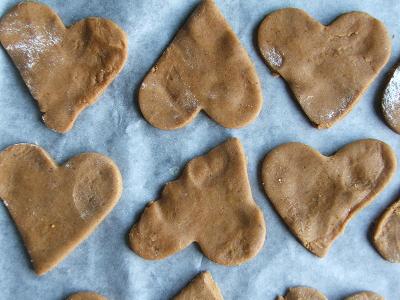
    Roll out the dough (it helps to put flour on the rolling pin, too), cut out shapes and use a flat knife to transfer them to a baking tray. I line mine with waxed baking paper first.
    Bake at 180 degrees Celcius for about 5-10 minutes, depending on their thickness.
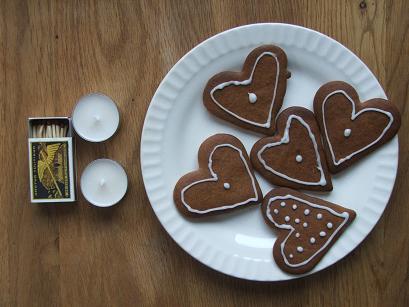
    To make the white icing for decorating, mix some icing sugar with a few drops of lemon juice and mix to a smooth paste. Use a icing set to pipe a pattern on the cookies. (I make one using a triangle of waxed paper and sellotape. 🙂

    Gingerbread4

  • Coffee cosyPlunger


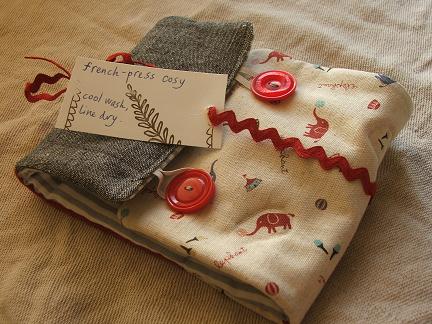
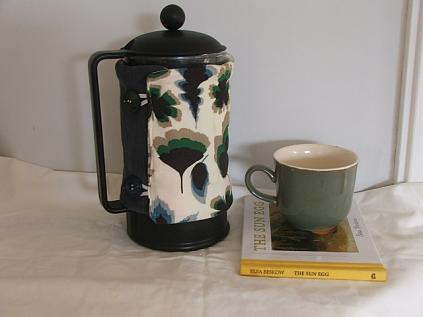
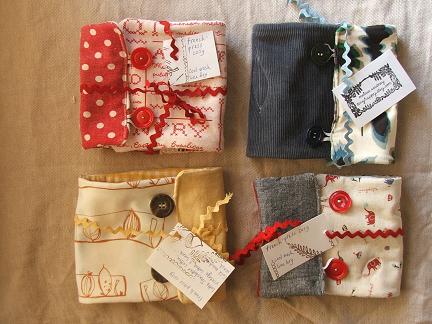
    So, I'm getting some things made for Christmas, and for the Christmas market I've signed up to do in our little town. I couldn't resist joining in with a 'proper' Christmas market- outdoors in the snow and dark, with candles, carol singers, lanterns and hot chocolate. At least, that's how I'm imagining it so I don't freak out about how cold it's going to be. Last week I promised I'd share some gift ideas each Thursday, so here's this week's one: a coffee-cosy/cozy/warmer thingy. I've included a tutorial in case you'd like to make some too. We are big coffee drinkers, and always use a French Press with one of these covers to keep the coffee warmer for longer. Let me know you notice any mistakes/strange things with this little tutorial.

    You'll need:
    piece of fabric measuring 5.5" X 14.5" for the outer layer
    piece of fabric measuring 5.5" X 14.5" for the lining layer
    piece of quilt batting or Insul-Bright or thick wool or similar for the inner layer, measuring 5.5" X 14.5"
    2 buttons (i used mis-matched vintage ones, about 2 cms diameter each)
    2 pieces thin elastic (i used 4mm wide), cut into 3.5" lengths
    sewing machine and thread

    Finished measurements:
    Laid flat, the French Press Cosy measures about 5" X 13.5". It fits our standard, 8-cup (I think), glass Bodum coffee plunger that measures about 8" from base to lid.

    Method:
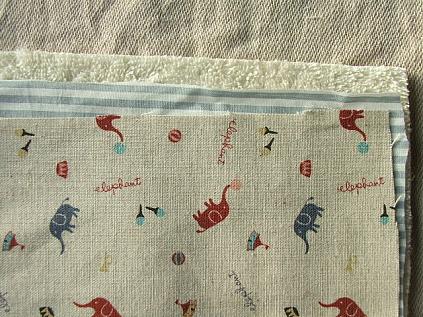
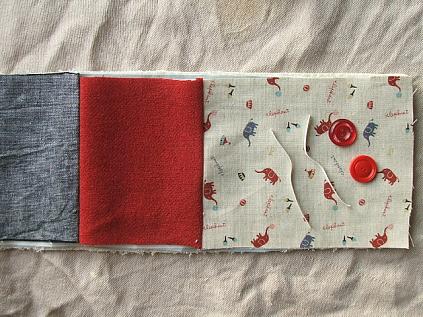
    1. Cut the three layers of fabric to the above measurements. I think quilt batting or Insul-Bright would be best for the middle layer of the cosy, but I can't seem to find either in my little town so I used an old, clean towel! In the past, I've also used thick wool fabric/blanket pieces. Feel free to get imaginative with the outer and lining layers- I like to use patchworked fabric for the outer piece- here I've used bits of Japanese linen, denim and wool from my scrap basket.

    Cut layers

    Supplies

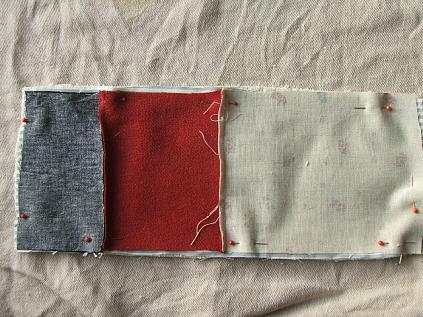
    2. Make a sandwich with the layers like this: place the batting down first on a flat surface, then lay the lining piece on top, right side up, then place the outer piece on top of that, right side down.

    Pin

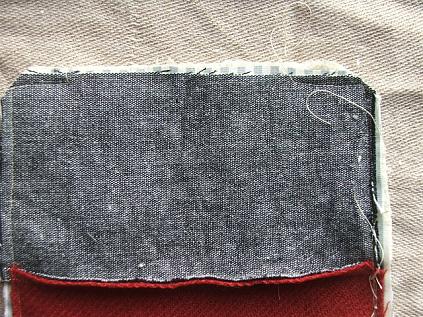
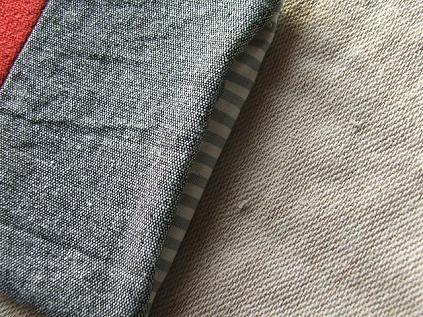
    3. Pin around all the edges, leaving a gap of about 4" in the centre of one of the short ends of the rectangle, as shown above. Sew around where you have pinned, being careful to catch all the layers as you go. Reinforce stitching if you need to, then clip the corners. Turn piece inside out, and press with a warm iron.

    Leave gap

    Press gap

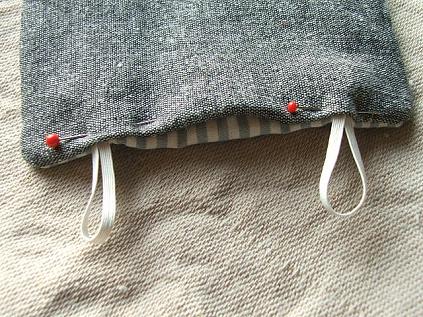
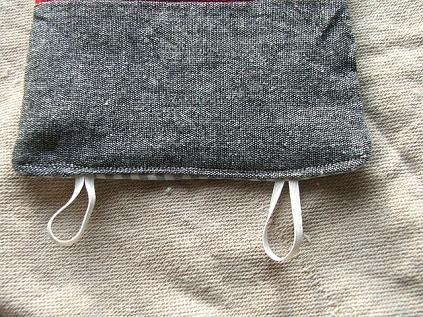
    4. Fold over and press together the raw edges where you have left the gap. Fold the pieces of elastic into loops, and insert the ends into the gap, near the edges of where you have sewn. (like below.) Pin them in place.

    Pin elastic

    Sew elastic

    5. Sew across the edge, securing the elastic loops as you do so. I'd sew this seam a few times, just to be sure the elastic is well and truly stuck in there.

    Quilt

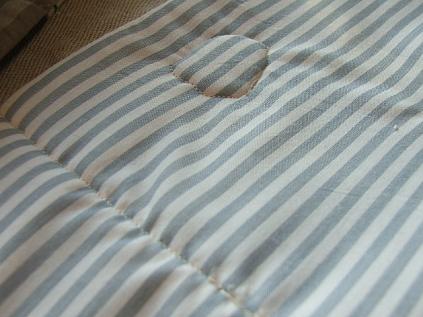
    6. I like to do a bit of machine quilting on the finished piece, to secure the three layers together.
    Then sew the buttons on to the other end (I use doubled-over thread to make sure they're really strong) to correspond with the elastic loops. You might need to try it on your French Press first, to see where they should be. And there, all finished!

    (I can never stop at one. It's quite fun to match them to your friends' kitchens/crockery…)

    Cosies

  • Satchel

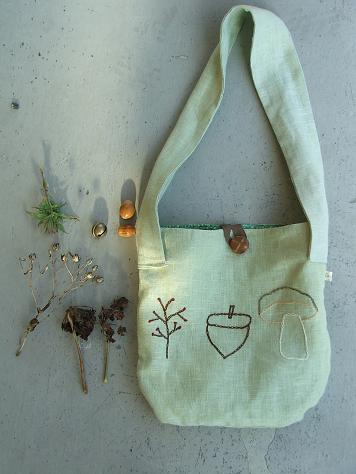
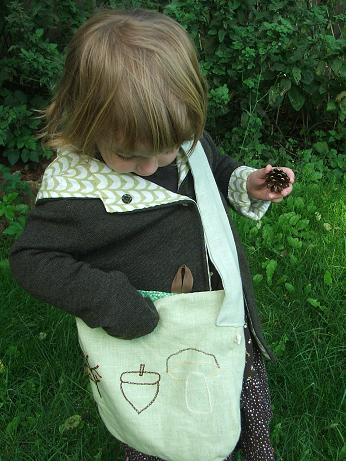
    Over the weekend we went walking in the forest, and saw lots of mushrooms, oak trees and some tyttebær branches, which were all things that I guess Keira would cram in her coat pockets, if she had them. (I forgot to add them to the autumn coat I made her.) So I did some Norwegian-Wood-inspired embroidery onto some pale green linen, then sewed it up into a little satchel for K. For collecting important things while out on her daily expeditions.

    Satchel3

    Satchel2


  • I am republishing my pattern for a knitted baby's dress which was originally in Magknits online magazine. Since the magazine's demise I have been asked to make the pattern available on my blog, so here it is. Big thanks to Nikki for finding the pattern for me, and Louise for sending me the pictures she had saved!
    Dress-2

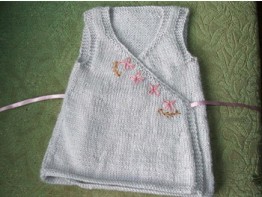
    Blossom is a simple
    wrap-around dress with embroidery for a baby girl. It’s suitable
    for all seasons, depending on the type of yarn you choose. I made this
    dress in a locally-made silk blend just as all the spring blossoms were
    opening from their buds here in New Zealand; a pure-wool yarn would be
    cosy for winter babies though, with a warm bodysuit and tights, and I’m
    planning on making a cotton version for the summer. The dress is knitted
    all in one piece, reducing potential bulkiness over tiny baby shoulders,
    and the garter stitch edges create a nice, almost elasticated finish without
    having to pick up and knit any stitches afterwards!

    Difficulty
    Level

    Simple

    Sizes
    0-3 months, 3-6 months, 6-9 months.
    Length 12 (13.5, 15)" / 30.5 (34, 38)cm
    Chest 19.5 (20.5, 21.5)" / 50 (52, 54.5)cm -varies because of wrap-around
    style.

    Materials
    3 (4, 5) 50gm balls of Silkwood Fine Blend (60% kid mohair, 30% merino
    wool, 10% silk), color 218 mauve. This yarn is probably difficult to obtain
    outside New Zealand, however the Silkwood Yarns email address is silkwood@silkwoodltd.co.nz
    See below for yarn substitutes.

    US 6 / 4mm needles
    US 4 / 3.5mm needles

    stitch holder
    wool needle

    pink and brown embroidery
    thread
    embroidery needle
    5/8 yd / 1/2m matching ribbon

    Yarn
    substitutes

    Debbie Bliss cotton cashmere or Rowan Wool Cotton would be suitable, but
    you could use any soft wool or cotton with which you can make the gauge
    measurements.

    Gauge
    24 sts and 29 rows = 14" / 10cm in stockinette with larger needles

    Abbreviations
    Kfb–knit into the front and back of next stitch; 1 st increased.
    Skp–slip 1, knit 1, pass slipped stitch over; 1 st decreased.

    Dress-4

    Back
    With smaller needles, cast on 60 (66, 72) sts. Work 4 rows garter stitch
    (knit every row). Change to larger needles and work 8 rows in stockinette,
    ending with a purl row.

    Next row: K3, s1,
    k1, psso, k to last 5 sts, k2tog, k3. Continue in stockinette, decreasing
    as above on every 10th row until 52 (58, 64) sts remain.

    Work even until work
    measures 7 (8.5, 10)" / 18 (21.5, 25.5)cm from cast on edge, ending
    with a purl row.

    Decrease 4 sts in
    the next row as follows: K3, skp, k3, skp, k to the last 10 sts, k2tog,
    k3, k2tog, k3; 48 (54, 60) sts remain.

    Work 15 rows even,
    ending with a purl row. Cast off 3 sts at the beginning of the next 2
    rows; 42 (48, 54) sts remain.

    Start
    armhole pattern:

    Row 1: K.
    Row 2: K4, p to last 4 sts, k4.
    Continue in this manner until armhole measures 3.5 (5, 6.5)" / 9
    (12.5, 16)cm, ending on a purl row.

    Shape
    neck:

    Row 1: K to end.
    Row 2: K4, p4 (5, 7), k26 (30, 32), p4 (5, 7), k4.
    Row 3: as row 1.
    Row 4: as row 2.
    Row 5: K12 (13, 15), cast off 18 (22, 24), k12 (13, 15).

    Turn and work on first
    set of 12 (13, 15) sts. Use spare needle or stitch holder for the second
    set, or keep them at the end of working needle.

    Row 6: K4, p4 (5,
    7), k4
    Row 7: K5, k2tog, k5 (6, 8); 11 (12, 14) sts remain.
    Row 8: K4, p to last 4 sts, k4
    Row 9: K.
    Repeat rows 8 and 9 seven times more.
    Dress-3

    Crossover
    front (left)

    Row 1: K4, p to last 4 sts, k4.
    Row 2: K1, kfb, k to end.
    Row 3: K4, p to last 4 sts, k2, kfb, k1.
    Repeat rows 2 and 3 until you have 31 (36, 40) sts, ending on a purl row.
    Knit 1 row.

    Cast on 3 sts at the
    beginning of the next row, for armhole shaping.
    Next row: P to last 4 sts, k2, kfb, k1.
    Continue increasing at front edge every row but without the garter stitch
    border at armhole edge, until you have 48 (54, 60) sts.
    Purl 1 row.
    Next row: K7, m1, k3, m1, k to last 8 sts, m1, k3, m1, k3; 52 (58, 64)
    sts.
    Next row: P to last 4 sts, k4.
    Next row: K to end.
    Next row: P to last 4 sts, K4.
    Repeat last two rows six times more.

    Work an increase row
    as follows: K7, m1, k to last 5 sts, m1, k to end; 54 (60, 66) sts.
    Keeping the garter st border at front edge, continue in stockinette, increasing
    as above on every 10th row, until you have 60 (66, 72) sts.
    Work eight rows without shaping.
    Change to smaller needles and work 4 rows garter stitch. Cast off.

    Crossover
    front (right)

    End of back neck:
    Rejoin yarn to second set of 12 (13, 15) sts.
    Row 1: K4, p to last 4 sts, k4.
    Row 2: K5, k2tog, k5 (6, 8); 11 (12, 14)sts.
    Row 3: K4, p to last 4 sts, k4.
    Row 4: K to end.
    Repeat rows 3 and 4 seven times more. Complete as for left front, reversing
    shaping.

    Crossover
    shaping:

    Row 1: K4, p to last 4 sts, k4.
    Row 2: K1, k to last 2 sts, kfb, k1.
    Row 3: K2, kfb, p to last 4 sts, k4.
    Repeat rows 2 and 3 until you have 31 (36, 40) sts, ending on a purl row.

    Cast on 3 sts at the
    beginning of the next row, for armhole shaping. K to end of row.
    Next row: K2, kfb, k1, p to end.
    Continue increasing at front edge every row but without the garter stitch
    border at armhole edge, until you have 48 (54, 60) sts.
    Purl 1 row.

    Next row: K7, m1,
    k3, m1, k to last 8 sts, m1, k3, m1, k3; 52 (58, 64) sts.
    Next row: K4, p to end.
    Next row: K to end.
    Next row: K4, p to end.
    Repeat last two rows six times more.

    Work an increase
    row as follows: K7, m1, k to last 5 sts, m1, k to end; 54 (60, 66) sts.
    Keeping the garter st border at front edge, continue in stockinette, increasing
    as above on every 10th row, until you have 60 (66, 72) sts.
    Work eight rows without shaping.
    Change to smaller needles and work 4 rows garter stitch. Cast off.


    Finishing
    Weave in all ends. Block dress to measurements (this is quite important
    so that the dress sits nicely.) I used the overnight ‘spritzing’
    method which worked well with the silk content in my yarn. Using mattress
    stitch, join side seams, leaving a small hole in the left side seam, below
    armhole, and directly opposite end of the crossover shaping. Cut ribbon
    in half and sew on each side of the dress where shaping ends. Work the
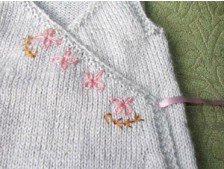
    embroidery on the left front. I worked four pink lazy-daisies, and some
    brown fern stitch, or work your own design. Thread the right-edge ribbon
    through the hole on the left of the dress and tie at the back.

  • Soft_balls

    Soft_balls3

    Here is how I made some simple patchwork balls last week, for my children to play with inside. They would make great new baby gifts, too! My daughter (3 yrs) enjoyed helping- choosing the fabrics and stuffing the finished balls. An older child might like to sew them up, too!

    Materials:

    small scraps of cotton fabric (I like to use quilter’s-weight cotton best, because it’s strong and less likely to fray at the seams.)

    needle and thread, scissors, pins

    paper and pencil

    sewing machine (but you could sew the whole thing by hand, if you don’t have a machine.)

    stuffing- polyfill is best for small babies, but you could also use fabric scraps or cotton or wool stuffing.

    optional: a small bell for a baby’s ball, rice to put with the stuffing for extra weight, or fill with just rice to make a hacky sack/juggling ball.

    1. First draw your pattern on a piece of paper. I drew a petal-like shape in two different sizes to make the two different sized balls. See the diagram below. Don’t worry too much about the accuracy of your piece, as long as it is even it should be fine! To make the bigger ball, I used a petal shape cut to the dimensions given below. To make the smaller ball, my shape was approx. 8.5 cms long, and 3.5 cms at the widest point. You could experiment with the size you like best. Cut out the pattern and the small circle piece, and choose your fabrics.
    Ball1

    2. Iron the pieces of cotton you will use, pin the pattern pieces on and cut out. For each ball, you will need six petal-shaped panels, and two small circle pieces.
    Ball2

    3. Sew the ball panels together. Place two pieces right-sides together, and pin. Sew from the top edge to the bottom, allowing a 1/4" seam. Don’t worry too much about the top and bottom of the ball, because you will cover those bits up later. Continue like this until you have sewn all six panels together.
    Ball4

    Ball5

    4. Now sew the last and first panel together, right sides together. Leave a gap in the centre of the seam, for turning and stuffing.
    Ball6

    5. Turn the ball right-side out and stuff with your chosen filling.
    Ball7

    6. Hand-sew up the opening. Next, hand-applique the fabric circles to each end of the ball, to cover the seam ends. If they are pretty tidy anyway, this might not be necessary. Alternatively, you could use fabric glue to attach felt circles. Voila, all finished!

  • Dresses2_2

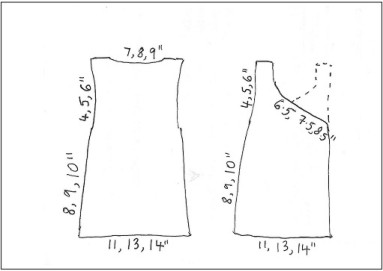
    Here is the promised pattern for a wrap-around dress to fit a 2-3 year old, approx. Please keep in mind that I am not an expert dressmaker, nor do I have perfect bias-tape skills, but I thought I would share the general guidelines for making a dress like this, in case you have a small girl who would like one.  

    Dresses1_3

    **Disclaimer** When I was making measurements for this pattern, I realised I shuffle and adjust the pieces a bit while I am sewing until the dress ‘sits right’ and/or fits the child properly. The wrap design is a forgiving one! So don’t worry if your pattern is not exactly like the one in my drawing- it should still turn out fine. Maths and measurements are NOT my forte- I like to think of myself as an ‘intuitive’ sewer- so please, treat my pattern as a ‘guideline’ only.

    This dress was inspired by a combination of two different dresses owned by my daughter: one store-bought, and one I made with guidelines from the vintage Japanese craft book ‘Cute infants outgrow clothes quickly’ (Kamakura Shobo Publishing Co, Ltd, 1984). It can be worn either way around- with the crossed part at the front, or the back, as shown above.

    It’s great in summer by itself, or in cooler weather worn over leggings or trousers and warm tops. As your child grows, the dress will become a wrap-top, but it should be easy to adjust for a bigger child- just cut the patterns out longer.

    *Please note* 1/4" seam allowance is included. Other measurements are in cms.

    You will need: 

    *paper, pen, ruler and scissors for making your pattern

    *sewing machine and thread

    *a piece of fabric approx. 90 cms wide, and 55 cms long. I use a medium-weight, cotton/linen blend fabric when I make this dress. You could also use linen, cotton, gingham (I made a green gingham  version here), lightweight denim or corduroy.

    *either store-bought or home-made bias tape- about 610cms long.

    1. Make your bias tape. You will need two pieces that measure approx. 28 cms for the front sides, two pieces that measure approx. 35cms for the armholes, and one long piece measuring approx. 2.5 meters for the rest of the dress plus ties. I make double-fold tape using my rotary cutter and ruler- cutting strips of fabric that are the same width as the ruler (7.5 cms/3"). If this is your first time applying bias tape, you might find this easier to use than the narrower store-bought type. A tutorial on making bias tape is here. I like to use vintage cotton sheets – it’s a great way to recycle them, and the old patterns look great with a plain-coloured dress. (There is another way to make bias tape, as shown here. You can also buy cool little gadgets that make the tape for you.)

    2.  Make yourself a pattern based on my drawings below (soon to be replaced with clearer ones- sorry!). Adjust the length if necessary. Fold fabric, right sides together, and place the ‘back’ pattern piece along the fold. Pin both fronts and back pieces to fabric, and cut out.

    Dress_pattern_front 

    Front pieces- (place fabric right sides together)

    Dress_pattern_back 

    Back piece- cut 1, on fold.

    3. Sew shoulder seams. Zig-zag or overlock (serge) to finish.

    4. Sew down ONE side of the dress to join. Now finish the seam, and finish both unsewn edges of the other side of the dress. Now sew this side together, but leave a gap about 7cms down, measuring about 2.5cms. This is for the tie to pass through.

    Opening2

    Side_opening

    Now it’s time to apply the bias tape. You’ll need a steam iron and lots of pins near by. I’m no expert when it comes to doing this, but I find that with practice, the technique gets easier. There are some online tutorials to help if you’re new to this- here’s one: Basic application of bias binding

    5. Apply bias tape to the straight sides of both front pieces. Don’t worry about finishing the edges- they will be covered later.

    Front_binding 

    6. Apply bias tape to the armholes.

    Armhole

    7. Apply the long piece of bias tape to the rest of the dress, starting at the half-way point on the neck. The neck and front trim and ties are all in one piece. As you go, cover the raw edges of the dress fronts, like so:

    Biasbinding

    8. Zig-zag/overlock the hem edge. Then press up a hem and sew in place.

    Hem

    9. Press dress and trim loose threads. Pass one tie through the interior opening, wrap it over at the back, and tie in front. Voila!

    Finished

    I added a pocket to this one, cut from the leftover piece where the neckline is cut from the fabric.

    Have fun (and good luck.)