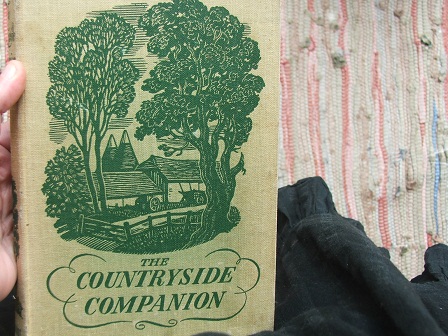
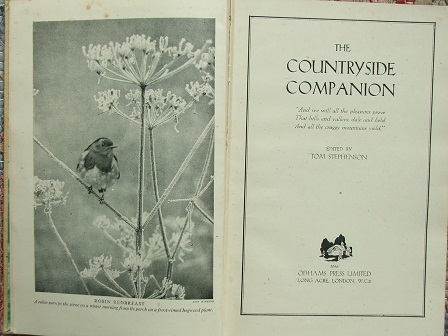
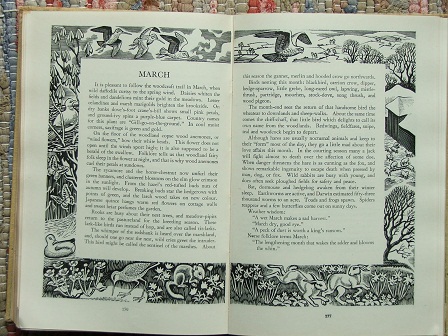
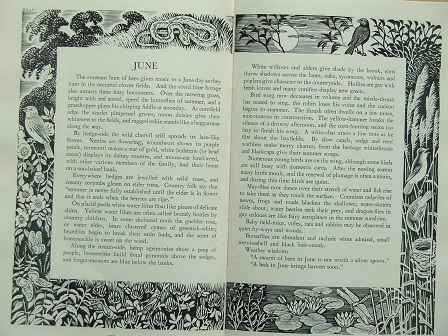
I found this old book at our local book fair, and had to buy it after peeking inside. It's called the Countryside Companion (published 1846 by Odhams Press, London, and edited by Tom Stephenson.) Can you imagine, writing a book, and having each page so beautifully illustrated? The page-borders are populated with swallows and willows, owls and waterlilies. The writing itself is sometimes overblown and pompous, and revels in British nationalism but I suppose it is a product of its time and place. I will keep enjoying it for the photography and artwork, for sure.
recent posts
about
- September 2025
- July 2025
- March 2025
- November 2024
- August 2024
- June 2024
- April 2024
- February 2024
- January 2024
- December 2023
- November 2023
- October 2023
- September 2023
- August 2023
- June 2023
- May 2023
- April 2023
- March 2023
- February 2023
- January 2023
- December 2022
- November 2022
- September 2022
- August 2022
- July 2022
- June 2022
- May 2022
- April 2022
- March 2022
- February 2022
- January 2022
- December 2021
- October 2021
- September 2021
- August 2021
- July 2021
- June 2021
- May 2021
- April 2021
- March 2021
- February 2021
- January 2021
- December 2020
- November 2020
- October 2020
- September 2020
- August 2020
- July 2020
- June 2020
- May 2020
- April 2020
- March 2020
- February 2020
- January 2020
- December 2019
- November 2019
- October 2019
- September 2019
- August 2019
- July 2019
- June 2019
- May 2019
- April 2019
- March 2019
- February 2019
- January 2019
- December 2018
- November 2018
- October 2018
- September 2018
- August 2018
- July 2018
- June 2018
- May 2018
- April 2018
- March 2018
- February 2018
- January 2018
- December 2017
- November 2017
- October 2017
- September 2017
- August 2017
- July 2017
- June 2017
- May 2017
- April 2017
- March 2017
- February 2017
- January 2017
- December 2016
- November 2016
- October 2016
- September 2016
- August 2016
- July 2016
- June 2016
- May 2016
- April 2016
- March 2016
- February 2016
- January 2016
- December 2015
- November 2015
- October 2015
- September 2015
- August 2015
- July 2015
- June 2015
- May 2015
- April 2015
- March 2015
- February 2015
- January 2015
- December 2014
- November 2014
- October 2014
- September 2014
- August 2014
- July 2014
- June 2014
- May 2014
- April 2014
- March 2014
- February 2014
- January 2014
- December 2013
- November 2013
- October 2013
- September 2013
- August 2013
- July 2013
- June 2013
- May 2013
- April 2013
- March 2013
- February 2013
- January 2013
- December 2012
- November 2012
- October 2012
- September 2012
- August 2012
- July 2012
- June 2012
- May 2012
- April 2012
- March 2012
- February 2012
- January 2012
- December 2011
- November 2011
- October 2011
- September 2011
- August 2011
- July 2011
- June 2011
- May 2011
- April 2011
- March 2011
- February 2011
- January 2011
- December 2010
- November 2010
- October 2010
- September 2010
- August 2010
- July 2010
- June 2010
- May 2010
- April 2010
- March 2010
- February 2010
- January 2010
- December 2009
- November 2009
- October 2009
- September 2009
- July 2009
- May 2009
- March 2009
- February 2009
- December 2008
- November 2008
- September 2008
- June 2008
- May 2008
- September 2007
- June 2006
18 responses to “countryside companion”
-
the photographs and illustrations are wonderful
you could always paint over the words if you wanted toLikeLike
-
Gorgeous. I wonder if it was a large publisher or a small art-house.
LikeLike
-
oh, gorgeous!
LikeLike
-
Oh my goodness. That is exquisite.
It is difficult to grapple with the idea that something so outwardly beautiful has some darker themes to it. I find the same complications in music.LikeLike
-
I have the same book but with a different dust jacket portraying an English village. It’s a reprint from 1947 and has a wonderful section on camping and caravanning.
LikeLike
-
It is really especial!!!
LikeLike
-
Those illustrations are wonderful 🙂 Great find!
LikeLike
-
What a fantastic find. I like Margie’s idea of “recycling” it.
LikeLike
-
Gorgeous illustrations… it’s only ever kids books that tend to be illustrated now!
LikeLike
-
A wonderful object.
LikeLike
-
It is beautiful and reminds me of an illustrated manuscript. I wonder what the author was like to plan such a lovely book.
LikeLike
-
Oh. It is so nostalgically whimsical & gorgeous! You hardly see books with such illustrations rendered with such love & care. What a wonderful find!
LikeLike
-
A great find. Lots of inspiration for stitcheries. Love Margies idea to recycle too. x
LikeLike
-
What a gorgeous book! I love vintage books.
LikeLike
-
I love old nature books. They are such fun to look through. I found some wild-flower and wild-tree guides that belonged to my aunt when she was little. The pictures were lovely.
LikeLike
-
I read it as a kid. It’s a wonderful snapshot of Britain immediately after WW2 – though I wasn’t aware of that at the time – practically a love letter to the landscape and wildlife of Britain, and an exhortation to its readers to explore their island. Sadly some of the species it mentions, like the Large Tortoiseshell butterfly, are now extinct in the UK. 😦
I’m not sure which of my parents originally owned it, but I suspect my father. As a lad he bicycled miles from his home exploring little known areas. Apparently he could be anywhere in a 50 mile radius from home. Eventually, in the late 40s, he decided to go further afield and bicycled around France, which was highly unusual in those days. 🙂 Reading it sparked up my interest in wildlife, old crafts, and weather lore. As for exploring – well I seem to have my father’s penchant for that. My daughter seems to have inherited it as well. 🙂
One of the things you’ll notice in pictures of villages – no street lights. They didn’t advance out into the country until later. In fact some places didn’t get electricity until very late. I was talking to an old woman in our village who remarked that they were still using paraffin lamps and gas lighting up until the 60s. Apparently folks often went to bed not long after it got dark. The elderly woman living next door still does.LikeLike
-
Lovely reflections, thank you!
– MelissaLikeLike
-
I’m just reading through it now. It’s a world that’s gone, and much else with it. The elms have gone, countless species have dropped in number or are endangered, even once common species such as starlings and sparrows have been hit, nearly all of the the rural crafts mentioned have gone, mixed farming has gone – the list goes on. 😦 I for one have never heard a nightingale, and it is 50 years since I last heard a cuckoo.
That’s what’s happened in the 70 years since the book was written. The impact is even more noticeable if you read Furneaux’s book on British butterflies and moths, printed in 1910 (beautiful plates BTW). He remarks, for example, that Hummingbird hawkmoths are too common to need description. I’ve never seen one in the wild. 😦 Round here, in rural Derbyshire, I found various species missing, although their larval foodplants were in abundance – the Common Blue butterfly, for example, though the older folk tell me that it was once common here. I’ve been reintroducing some species, including the Common Blue. Meanwhile the population of rabbits has crashed, and it’s not due to myxamatosis.
Wildlife has been hit largely by changes in farming practices and habitat fragmentation, plus changes in the seasons. I spend a lot of time on the land, so I tend to notice that things are – drifting.
I recall my father saying that as a lad, the fields he roamed in were full of clouds of butterflies. I’ve noticed the number of butterflies and bees have dropped considerably since I was a lad, and they weren’t at the level they were when he was young. When I was a kid summer was full of noticeable lazy buzzings from flowers. It was a general background noise of summer if you were in the garden. It was still like that in my teens and 20s in the 70s. Not these days, despite us having a smallholding and doing our damndest to support the local butterflies and bees, including putting out a container of damp soil for butterflies to drink from in the recent heatwave (yes, butterflies get thirsty as well – we had gangs of them drinking). Well, they’re pollinators, so we want every pollinator we can draw to us to pollinate the crops. Despite our efforts there’s a fraction of the insects that there used to be and should be, even though our place looking to the casual observer like a wildlife paradise compared to most places. 😦 We’ve even had bats living over the kitchen. 🙂LikeLike


Leave a reply to Jennifer Lin Cancel reply