

I've been thinking about making myself a new winter coat for a while now. I still love wearing this one I made last year, but it's more of a spring/autumn layer because I used quite a lightweight wool to make it. And my proper winter coat is now in its fourth year of use and definitely a bit tired.
Two weeks ago I bought and downloaded a PDF pattern, gathered my supplies, took a deep breath and got to work. I was lucky enough to have a good length of black cashmere wool coating waiting on my shelf. I found this for something like $30 a couple of years ago at Fabricabrac, which is a local secondhand fabric market. It's very beautiful and soft wool fabric, and I don't think I would have bought something so lovely new. I'm very grateful to the kind woman who sold it to me in 2017!
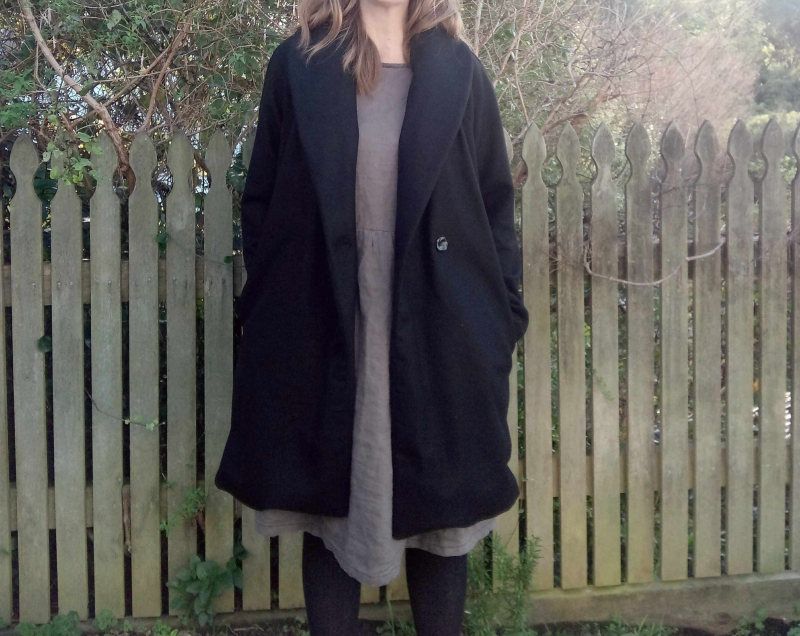
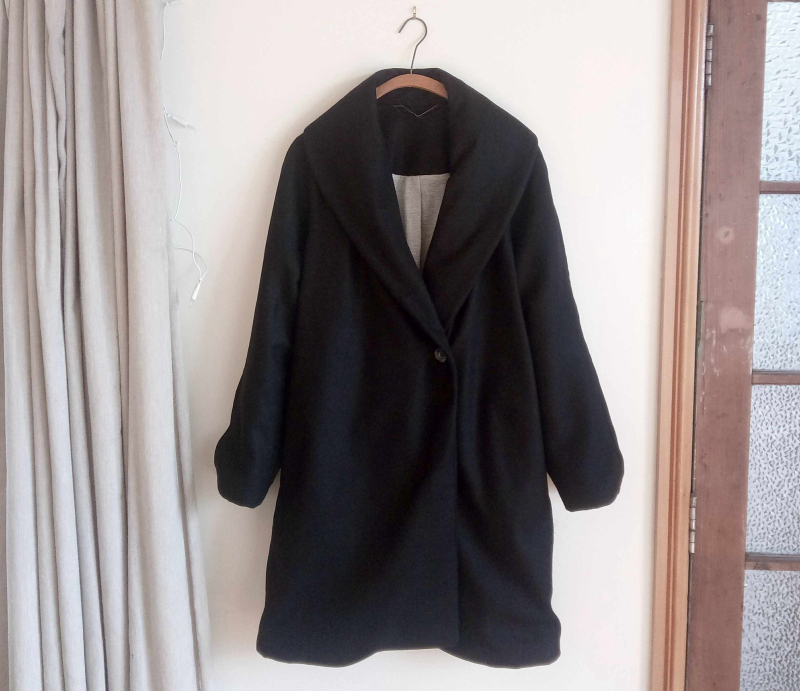
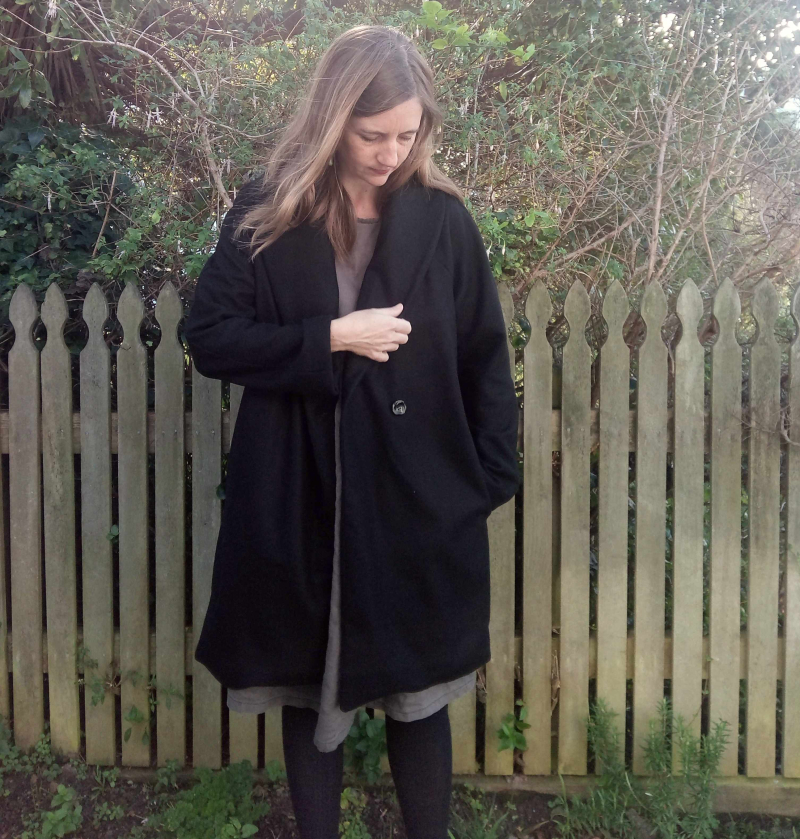
I chose the Oslo Coat pattern, by Tessuti Fabrics. The design has a deep shawl collar, nice big pockets, lining details such as neat finishing and an interior pleat and raglan sleeves. I'm glad I chose this pattern, and know I'll get a lot of wear out of this coat. The finished garment is slightly fitted around the shoulders and neck but loose and swingy at the bottom, and it's really comfortable to wear.
I did experience a few dramas though, as is typical for me when sewing. I thought I'd jot down some of my thoughts about the pattern while they're still fresh in my mind. Please feel free to scroll on past if you're not likely to sew this coat yourself!
- The pattern comes in two different size brackets, 6-10 or 12-16. I thought this was a shame, as many people would fall somewhere in between 10-12 (myself included), and the way the pattern is drafted allowed for a lot of extra space around the pattern pieces (enough for, I suspect, ten different sizes or more). In the end I chose the smaller bracket in case Keira would like me to make her an Oslo Coat at some point, and she would fit a size 6.
- I would have much preferred to order a printed pattern from Tessuti than pay for the PDF download. But because I couldn't be sure the smaller size bracket was the best one for me, I thought the cheaper option was better. (Also, even though Tessuti is in Australia, shipping to NZ was listed as $30 – which is nearly the same as the pattern price).
- When I realised the PDF consisted of more than 100 pages, I took the files on a memory stick down to my local print shop. But they ran out of A0 paper that day (of course!) and then had a problem with the machine the next day, and eventually printed my pattern on card-stock, which of course is not ideal for sewing! I had to trace the pattern pieces onto lighter paper before cutting them out. In order to save some paper, I didn't print out the instructions but rather read from my computer as I worked.
- I made the size 10, and lengthened it just a little bit. I'm happy with the fit (I'm usually somewhere around a 'medium' in shop-bought clothes) and it should be roomy enough to wear warm knits underneath in the coldest days of winter.
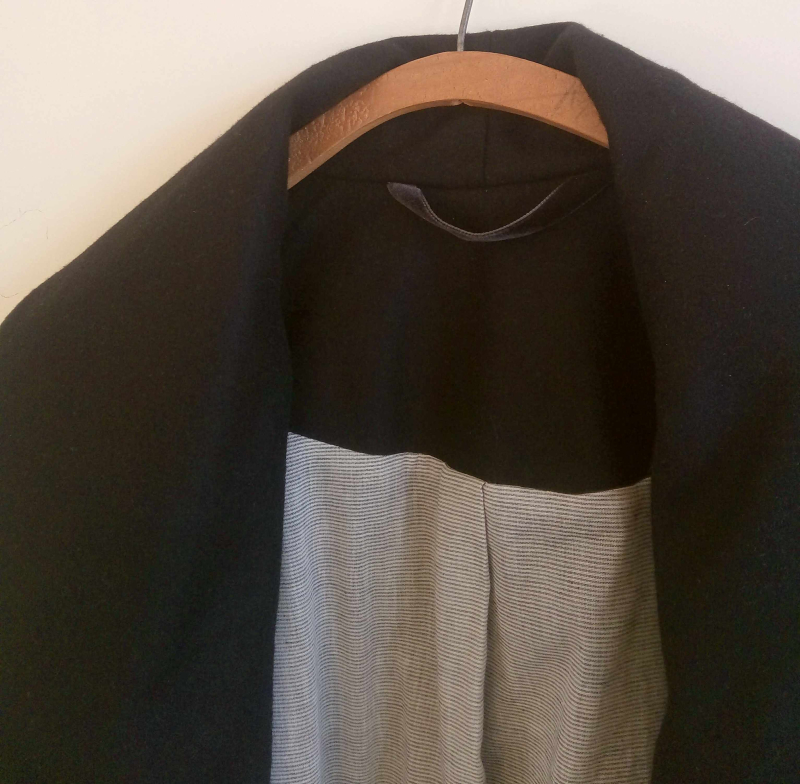
- When cutting out my lining, I was just the slightest bit short (I had hoped to use this vintage hand-painted silk Mum gave me) so that delayed the process again. I used some fine cotton lawn with narrow grey and cream stripes. I was concerned that I should have chosen something silkier (to help slip the coat on and off more easily) but it turned out fine.
- The coat has a raglan sleeve and neckline design, but I didn't realise until cutting the pattern that the sleeves have a seam running from the top of the shoulder to the wrist. This allows a sloped shape, but I'm not convinced that raglan sleeves need an upper seam and in a heavier weight coating, this could look bulky and awkward, especially considering the lining has the same seam.
- On the whole, I found the pattern instructions to be clear and easy to follow. There were a few small things that might be confusing though, such as giving the instructions for 'sleeve' (singular) but not mentioning to repeat with the second sleeve. This might be obvious, but there were times when the pattern called for attention to only one side or sleeve (such as leaving a gap for turning, etc). Also, there were no mentions of clipping corners or curved seams, so new sewers might not have known to do that for a better finish.
- I added a piece of velvet ribbon between the back and neck facing, so the coat can be more easily hung up.
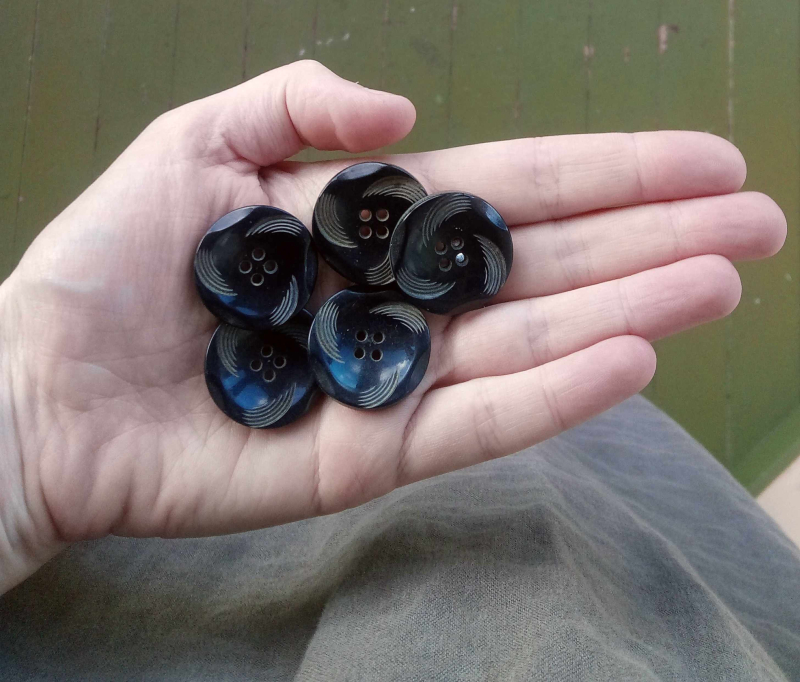
The coat only needs two buttons: one on the front and one underneath to anchor it. I chose some beautiful old vintage plastic buttons I also found at Fabricabrac – I love their slightly art deco vibe. I worked the buttonholes by hand (and learned a lot from this little video by a professional tailor – please note, my buttonholes are not nearly as good, but maybe I will practice them).
I don't think I'll need to wear this garment for maybe a month or so, as it's very warm and we're enjoying a pretty settled autumn so far here in Wellington. (early morning suburb shot above is to illustrate). There something very comforting about having it waiting in the wardrobe, though. I do love it!
+ + + + + + +
This new album has been a favourite this week: Designer, by Aldous Harding. This is the song that drew me to the album in the first place – it was playing on the radio in the car as I was coming back from the supermarket, and somewhat elevated the experience.
+ + + + + + +


 tiny happy
Leave a reply to Julie Cancel reply